

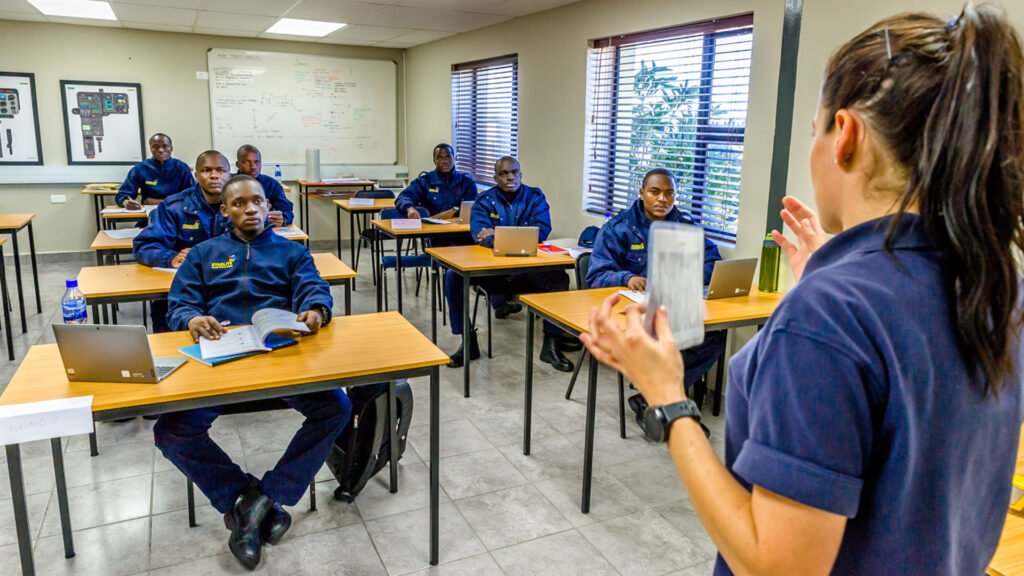
This course provides a practical and clear exploration of the challenges, requirements, and best practices for developing effective Safety Management Systems (SMS) training in airlines. It targets safety managers, training specialists, compliance officers, and flight operations personnel. Moreover, it benefits all aviation professionals who contribute to building a strong safety culture.
Airline teams often ask: “Does our SMS training fully meet regulatory standards?”, “How can we make SMS content engaging for all employees?”, and “How can we improve safety performance through training?” This course directly addresses these questions. Specifically, it guides participants in creating SMS training programs that are effective, measurable, and results-oriented.
Safety Risk Control and Continuous Improvement
The training begins by explaining the essential SMS components: safety policy, safety risk management, safety assurance, and safety promotion. Participants then learn how to review existing materials, identify gaps, and restructure content. Furthermore, the course emphasizes proactive hazard reporting, risk assessment, and continuous improvement processes.
A major focus lies in real operational scenarios. Participants actively practice techniques that make safety concepts easier to understand and relevant to various roles. In addition, the course demonstrates how to connect these concepts to daily operational decisions. You will also discover strategies to communicate safety expectations clearly and encourage active participation, which ensures that safety knowledge translates into safer behaviors.
By the end of the program, participants can confidently design SMS training frameworks aligned with regulatory requirements. Consequently, the training supports organizational goals and enhances overall safety performance. You will gain confidence in leading discussions with colleagues, management, and stakeholders while understanding the unique characteristics of your airline. Ultimately, this course empowers you to foster a training environment where safety is consistently understood, applied, and improved across the organization.