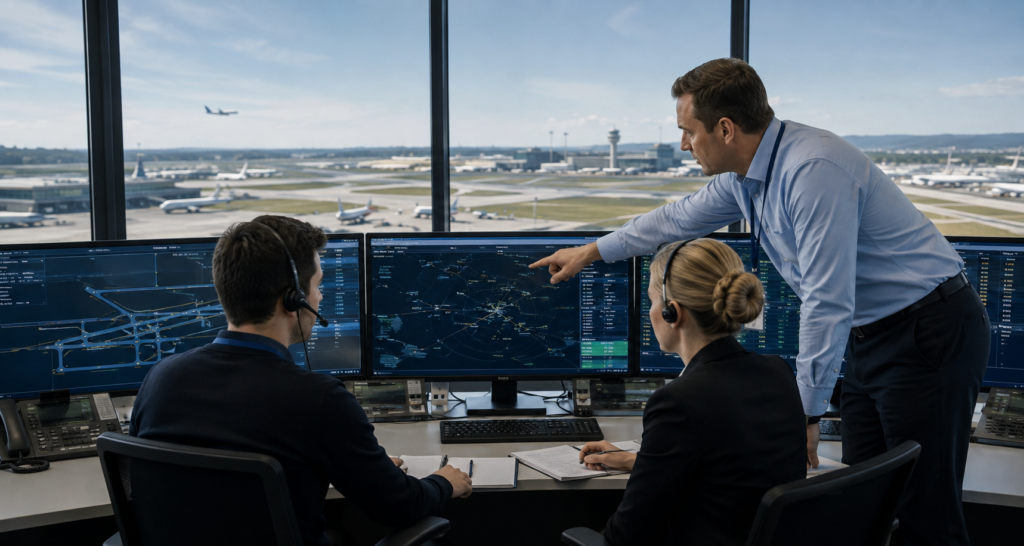


The Airline Cost Structure Analysis and Operational Efficiency course is designed for aviation professionals who aim to strengthen their strategic decision-making and reduce operational expenses. It also helps them optimize airline performance in a competitive market. This comprehensive program provides a deep dive into how airlines manage, analyze, and control costs. Furthermore, it explains how to improve productivity across all operational areas.
The course starts with a clear breakdown of the airline cost structure and covers fixed vs. variable costs and direct vs. indirect expenses. It discusses the importance of Cost per Available Seat Kilometer (CASK) as a core financial metric. In addition, participants learn how to interpret these cost components and apply them to real-world business scenarios.
A major part of the program focuses on Operational Efficiency and Process Improvement. This includes lean management practices specific to airline operations. Trainees explore workflow optimization techniques for both ground and inflight services. They also study strategic methods to reduce turnaround times without compromising safety or service quality.
In the Fleet and Route Optimization module, participants discover how fleet composition and aircraft selection impact overall cost performance. They also explore route network planning and scheduling efficiency. The training covers fuel management—one of the biggest airline expenses—and highlights fuel hedging, weight-reduction strategies, sustainable fuel adoption, and environmental considerations.
The course emphasizes technology-driven cost reduction, including the use of AI for predictive maintenance. It includes automation in operations and crew planning, as well as digital tools for performance monitoring. Besides this, participants gain insight into benchmarking techniques, critical KPIs for cost efficiency, and continuous improvement frameworks such as PDCA and Six Sigma.
Practical value is reinforced through real airline case studies and interactive cost-optimization simulations. This enables learners to apply concepts directly to operational challenges.
This course equips aviation professionals with the tools they need to make smarter decisions and improve efficiency. It also helps them enhance airline profitability in a rapidly evolving industry.