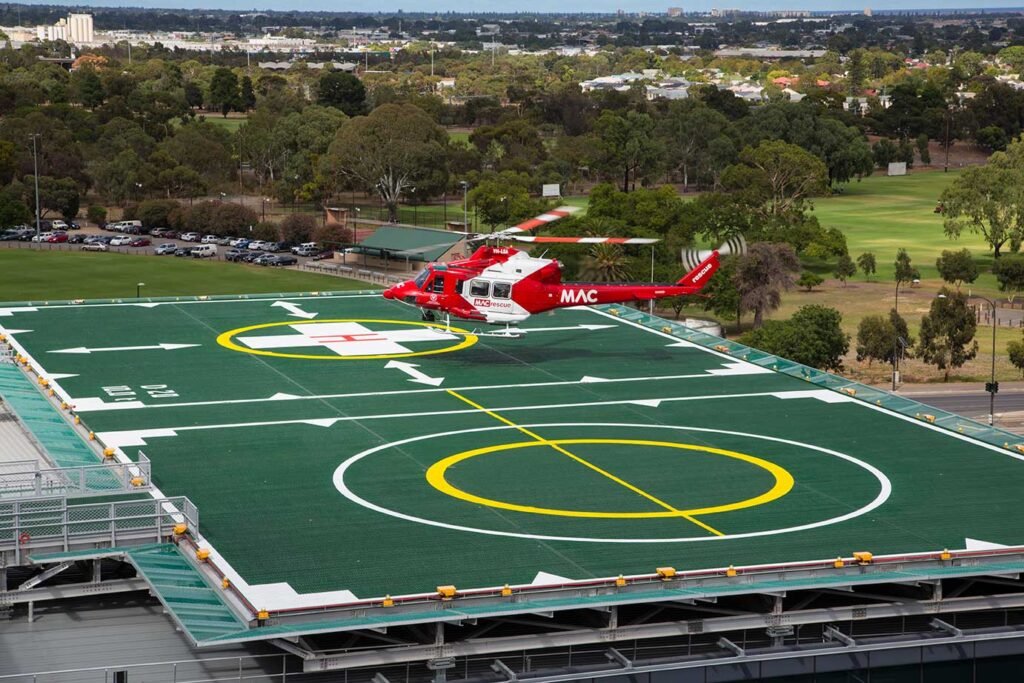
The Heliport Planning and Design course delivers comprehensive training on international heliport standards and infrastructure design. Over five intensive days, participants gain practical and regulatory knowledge aligned with International Civil Aviation Organization requirements. In particular, the course focuses on the direct application of ICAO Annex 14, Volume II and the ICAO Heliport Manual Doc 9261.
First, instructors explain the regulatory framework and its operational implications. Then, they guide participants through the planning and dimensioning of surface-level and elevated heliports. In addition, the course covers helidecks and shipboard heliports. As a result, participants understand how to apply standards in real-world projects. Moreover, the program connects infrastructure design with operational requirements from ICAO Annex 6 Part III and safety principles from ICAO Annex 19.
Throughout the training, participants analyze key components such as FATO, TLOF, safety areas, and taxiways. Furthermore, they evaluate obstacle limitation surfaces and declared distances. At the same time, instructors clarify how helicopter performance classes influence design decisions. Consequently, attendees develop a performance-based approach to heliport planning.
In addition, the course addresses visual aids, markings, and lighting systems for day and night operations. Subsequently, participants examine heliport emergency response planning and rescue and fire-fighting requirements. Finally, the program explores offshore helidecks and instrument heliports, including precision and non-precision approaches.
Overall, this course enhances technical competence and regulatory confidence. Therefore, aviation authorities, airport operators, engineers, and inspectors can design, assess, and manage heliport infrastructure in full compliance with international aviation standards.