
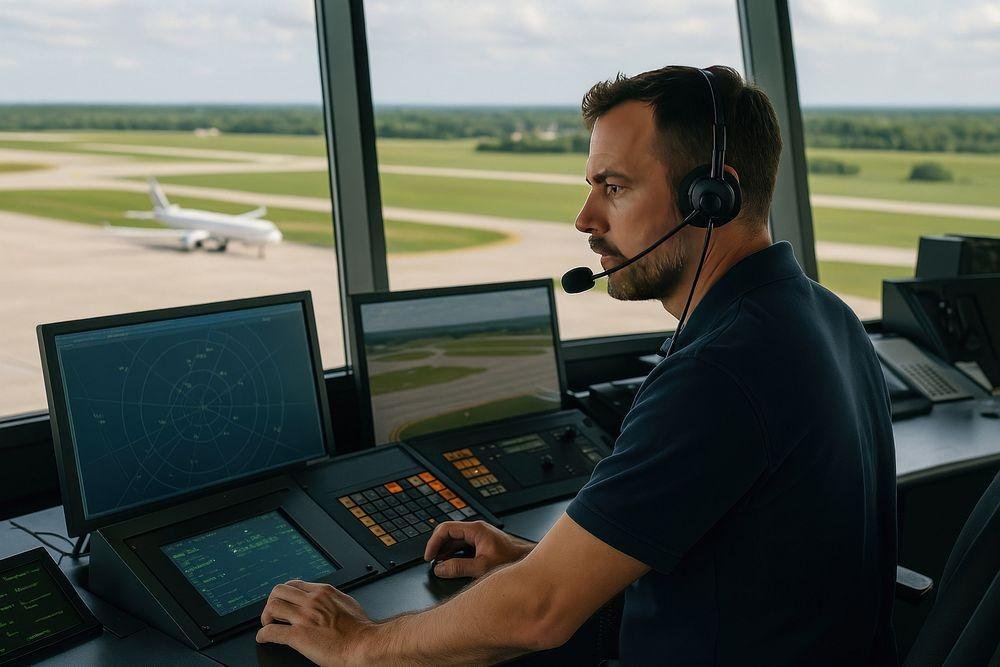
Radio Communication and Phraseology
ClassroomVirtual

Radio Communication and Phraseology

Language: English, French, Portuguese
Duration:
3 Days
Get More Information
Fill out this field
Please enter a valid email address.
Fill out this field

About the course

The Radio Communication and Phraseology Training Course equips aviation professionals with the knowledge and practical skills to communicate clearly and effectively in aviation operations. The course focuses on ICAO standard phraseology, aeronautical radio communication, and radiotelephony procedures.

Clear communication plays a vital role in aviation safety. Pilots, air traffic controllers, airport staff, and ground handling teams must exchange information accurately. As a result, this helps prevent misunderstandings and reduce operational risks.

Throughout the course, participants will explore ICAO communication standards, radio operating procedures, the phonetic alphabet, number pronunciation, call signs, and standard aviation terminology. Additionally, they will learn how to use readback and hearback procedures to confirm instructions and prevent communication errors.

The programme covers routine, non-routine, and emergency communication scenarios. This includes ground movement, aerodrome operations, air traffic services, MAYDAY and PAN PAN procedures.

Through practical exercises, audio activities, role-playing, and operational case studies, participants will develop their communication skills. In addition, they will gain confidence in using standard aviation phraseology.

By the end of the course, participants will be better prepared to handle radio communication tasks. Furthermore, they will support safe, coordinated, and efficient aviation operations.

Key Topics

Module 1: Introduction to Aeronautical Radio Communication
  • Role and importance of radio communication in civil aviation.
  • Basic principles of aeronautical communication.
  • Communication responsibilities of aviation personnel.
  • Radio communication systems and equipment.
  • Communication channels and frequencies.
  • Factors affecting communication quality and reliability.
Module 2: ICAO Regulatory Framework and Communication Standards
  • Overview of ICAO communication requirements.
  • ICAO Annex 10 – Aeronautical Telecommunications.
  • ICAO Doc 9432 – Manual of Radiotelephony.
  • ICAO Doc 4444 – PANS-ATM communication provisions.
  • Standardization of aeronautical communication procedures.
  • Responsibilities of States and aviation service providers.
Module 3: Radio Communication Procedures and Techniques
  • Basic radio operating procedures.
  • Establishing and maintaining radio contact.
  • Calling procedures and identification.
  • Message transmission and reception.
  • Radio discipline and communication protocols.
  • Frequency management and communication priorities.
Module 4: Aviation Alphabet, Numbers and Standard Terminology
  • ICAO phonetic alphabet.
  • Standard pronunciation of numbers.
  • Transmission of callsigns, frequencies and flight levels.
  • Standard aviation terminology and abbreviations.
  • Clarity, speed and accuracy in message delivery.
  • Common pronunciation and interpretation errors.
Module 5: ICAO Standard Radiotelephony Phraseology
  • Principles of standard aviation phraseology.
  • Standard words and expressions.
  • Message structure and sequencing.
  • Correct use of standard phraseology.
  • Conditional clearances and instructions.
  • Avoiding non-standard expressions and ambiguous messages.
Module 6: Aerodrome, Ground and Tower Communication
  • Ground control communication procedures.
  • Aircraft taxiing and ground movement instructions.
  • Runway entry, crossing and holding procedures.
  • Take-off and landing communication.
  • Aerodrome traffic circuit communication.
  • Coordination between ground and tower control.
Module 7: Air Traffic Services Communication and Operational Coordination
  • Communication between pilots and air traffic controllers.
  • Approach and departure communication.
  • En-route communication principles.
  • Coordination between ATS units.
  • Transfer of communication and frequency changes.
  • Communication with airport operations and other aviation stakeholders.
Module 8: Readback, Hearback and Communication Error Prevention
  • Principles of readback and hearback.
  • Mandatory readback requirements.
  • Identifying and correcting communication errors.
  • Misunderstandings and ambiguous instructions.
  • Human factors affecting communication.
  • Techniques for improving situational awareness.
Module 9: Non-Routine and Abnormal Communication Procedures
  • Communication during abnormal operational situations.
  • Handling unexpected instructions and situations.
  • Radio communication failure procedures.
  • Loss of communication scenarios.
  • Communication during adverse weather conditions.
  • Coordination and information exchange during operational disruptions.
Module 10: Emergency, Distress and Urgency Communications
  • Distinction between distress and urgency situations.
  • MAYDAY and PAN PAN procedures.
  • Emergency message structure and priorities.
  • Aircraft emergency communication.
  • Communication during aircraft incidents and accidents.
  • Emergency coordination between pilots, ATS and airport emergency services.
Module 11: Practical Radio Communication Simulations and Case Studies
  • Simulated pilot-controller communication.
  • Ground movement and runway communication exercises.
  • Standard phraseology role-playing scenarios.
  • Readback and hearback practical exercises.
  • Emergency and abnormal situation simulations.
  • Identification and correction of communication errors.
  • Group-based operational communication exercises.

Module 12: Final Assessment and Knowledge Evaluation

  • Written knowledge assessment.
  • Practical radiotelephony assessment.
  • Evaluation of standard phraseology application.
  • Assessment of communication clarity and accuracy.
  • Review of key learning outcomes.
  • Participant feedback and course evaluation.

Objectives

By the end of the course, participants will be able to:

  • Understand the principles of aeronautical radio communication.
  • Apply ICAO standard radiotelephony phraseology.
  • Use correct aviation terminology and pronunciation.
  • Conduct clear and structured radio communications.
  • Understand communication procedures in routine and non-routine situations.
  • Identify and prevent communication errors.
  • Apply appropriate phraseology during emergency situations.
  • Demonstrate effective communication through practical exercises.

Targe Audience

  • Air Traffic Controllers.
  • Aerodrome Operations Personnel.
  • Airport Operations Officers.
  • Flight Operations Personnel.
  • Aviation Safety and Compliance Officers.
  • Ground Handling Personnel.
  • Civil Aviation Authority Personnel.
  • Aviation Communication and Coordination Staff.

Certificate

Upon completion, participants receive
a certificate of achievement.

Request More Information

Full name *
Fill out this field
Email *
Fill out this field
Message
Fill out this field

Other trainings

terminal management
ClassroomVirtual

Terminal Management and Operations

The Terminal Management and Operations Training Course provides aviation professionals with the knowledge and practical skills required to manage modern…
Airport