

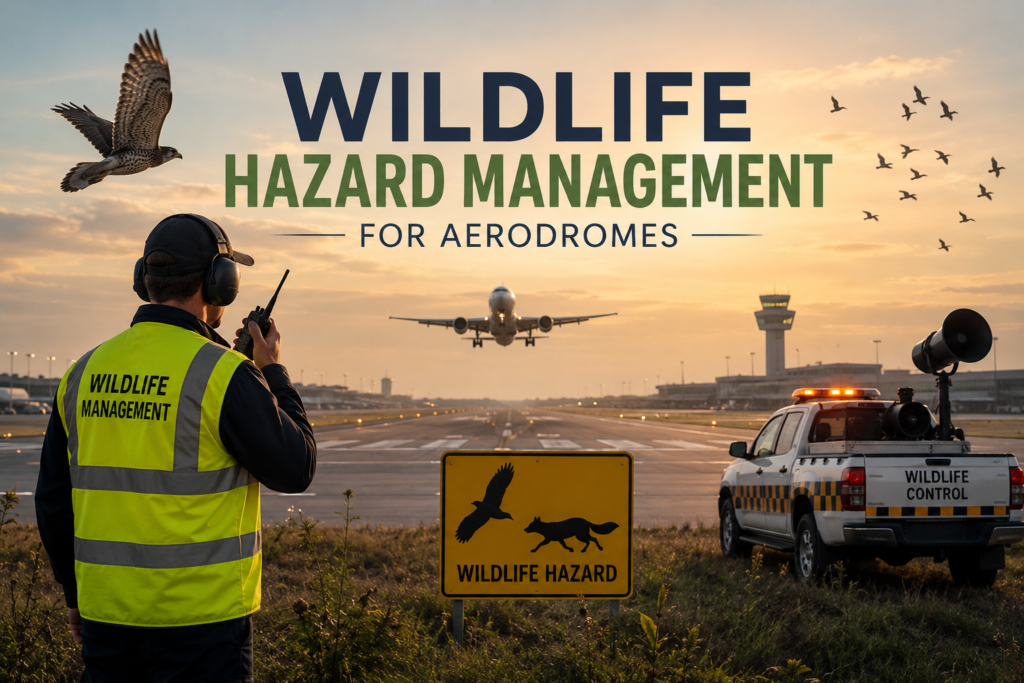
Wildlife Hazard Management for Aerodromes is a specialized aviation training course designed to support airports, aerodrome operators, and civil aviation authorities in managing wildlife-related safety risks in accordance with ICAO and EASA requirements. Wildlife strikes involving birds and other animals continue to pose serious threats to aircraft operations, particularly during take-off, landing, and ground movement phases. Effective wildlife hazard management is therefore essential for maintaining aerodrome safety and operational continuity.
This comprehensive 3-day course provides participants with the knowledge, tools, and practical techniques required to establish, implement, and improve Wildlife Hazard Management Programs at aerodromes. The training covers international regulatory requirements including ICAO Annex 14, ICAO Doc 9137, ICAO PANS-Aerodromes, EASA aerodrome regulations, and industry best practices related to wildlife hazard control and prevention.
Participants will learn how to identify hazardous wildlife species commonly found around airports and understand the environmental conditions that attract wildlife to aerodrome environments. The course also addresses wildlife strike reporting procedures, documentation requirements, and risk assessment methodologies used to support proactive safety management within an aerodrome Safety Management System (SMS).
The training includes detailed guidance on habitat management, vegetation control, active wildlife deterrence methods, data collection, trend analysis, and wildlife safeguarding strategies. Delegates will also explore the latest wildlife control technologies, equipment, and operational practices used by airports worldwide to reduce the risk of wildlife strikes.
Designed in an interactive format, the course combines presentations, case studies, group discussions, practical exercises, and wildlife observation activities to ensure participants gain both theoretical understanding and practical application skills.
This course is ideal for aerodrome operations personnel, airport safety managers, wildlife control officers, civil aviation authority inspectors, and SMS professionals seeking to enhance aerodrome wildlife safety and regulatory compliance.